



Blocked Drains Caused by Tree Roots in Lyttelton Manor
The garden in Lyttelton Manor looked perfectly ordinary. A row of mature fig and oak trees lined the boundary wall, their canopies casting generous shade across a well-kept lawn. Beneath the surface, those same roots had been threading themselves through an ageing clay sewer pipe for years, until the weekend the homeowner’s toilets refused to flush and a dark, foul-smelling liquid began rising through the shower tray.
That call reached the Drain Masters team on a Saturday morning. Within the hour, the technicians were on site in Lyttelton Manor with a CCTV pipe inspection camera and a high-pressure water jetter, ready to find out exactly what had taken hold inside the sewer lateral. What they found is one of the most common yet underestimated threats facing established residential plumbing systems across Centurion: tree-root intrusion so advanced that the pipe’s internal bore had been reduced by more than two-thirds, with a dense mat of fibrous roots trapping grease and debris into a near-solid plug.
Why Lyttelton Manor Faces a Higher Risk Than Most Suburbs
Lyttelton Manor was developed from the 1950s onwards, and much of its original sewer reticulation was laid in clay or concrete pipe, materials that are porous at the joints and degrade steadily over decades of ground movement and temperature cycling. The suburb’s established gardens are part of its character, but mature species common to Centurion properties, including cape fig, white stinkwood, sycamore, willow, and oak, produce root systems that travel extraordinary distances in search of moisture. A sewer pipe represents a near-perfect target: warm, nutrient-rich, and almost always carrying a trickle of moisture even during dry months.
Roots do not need a large opening to gain entry. A hairline crack at a pipe joint, a slightly misaligned socket, or a section of pipe that has shifted fractionally after a storm is sufficient. Once inside, the root tip exploits the hospitable environment and branches rapidly into a dense web, the kind of formation blocked drain technicians describe as a root ball. The City of Tshwane’s infrastructure maintenance records for southern Centurion consistently flag ageing lateral connections in suburbs like Lyttelton Manor, Doringkloof, and Clubview as a recurrent maintenance concern. Wet summer soils drive root growth faster; the drying and contracting of soil in winter opens new joint gaps for the following growing season.
How Tree Roots Cause a Drain to Block Completely
The process is gradual and largely invisible until it is severe. Root intrusion follows a predictable three-stage progression that drain unblocking professionals in Centurion encounter repeatedly across older suburb call-outs.
- Entry and establishment: Fine root tips penetrate a joint crack or gap, attracted by the oxygen, warmth, and moisture inside the pipe. At this stage there is no perceptible impact on drainage speed and no visible warning signs indoors.
- Root ball formation: The initial root tips branch and thicken into a fibrous mass that spans the pipe’s internal bore. Grease, toilet paper, food particles, and other debris begin to accumulate against this web, accelerating the blockage rate significantly.
- Full blockage and pipe stress: The combined root mass and trapped debris reduces flow to near zero. At this stage the pipe walls themselves may be under mechanical stress from root expansion, increasing the risk of cracking or joint displacement that requires excavation to repair.
Key warning signs to act on immediately: gurgling sounds from toilets or floor drains when other fixtures are in use; slow drainage across multiple points in the home simultaneously; a recurring foul odour from drains even after cleaning; and wastewater backing up through a ground-floor shower or floor drain. Any one of these signals warrants a professional camera inspection before the blockage becomes structural.
Walkthrough: The Lyttelton Manor Job on Camera
The video below documents the Drain Masters technician working through the root blockage on site. It covers the initial camera survey, the insertion of the jetter head, the clearing of the root ball, and the final flow confirmation. See also our Buccleuch drain unblocking case study for a comparison job on a grease-blocked kitchen drain using the same high-pressure jetting method.
Drain Masters technician using high-pressure water jetting to clear a tree-root blockage in Lyttelton Manor, Centurion. Total on-site time: under 90 minutes.
Before, During and After: The Full Picture
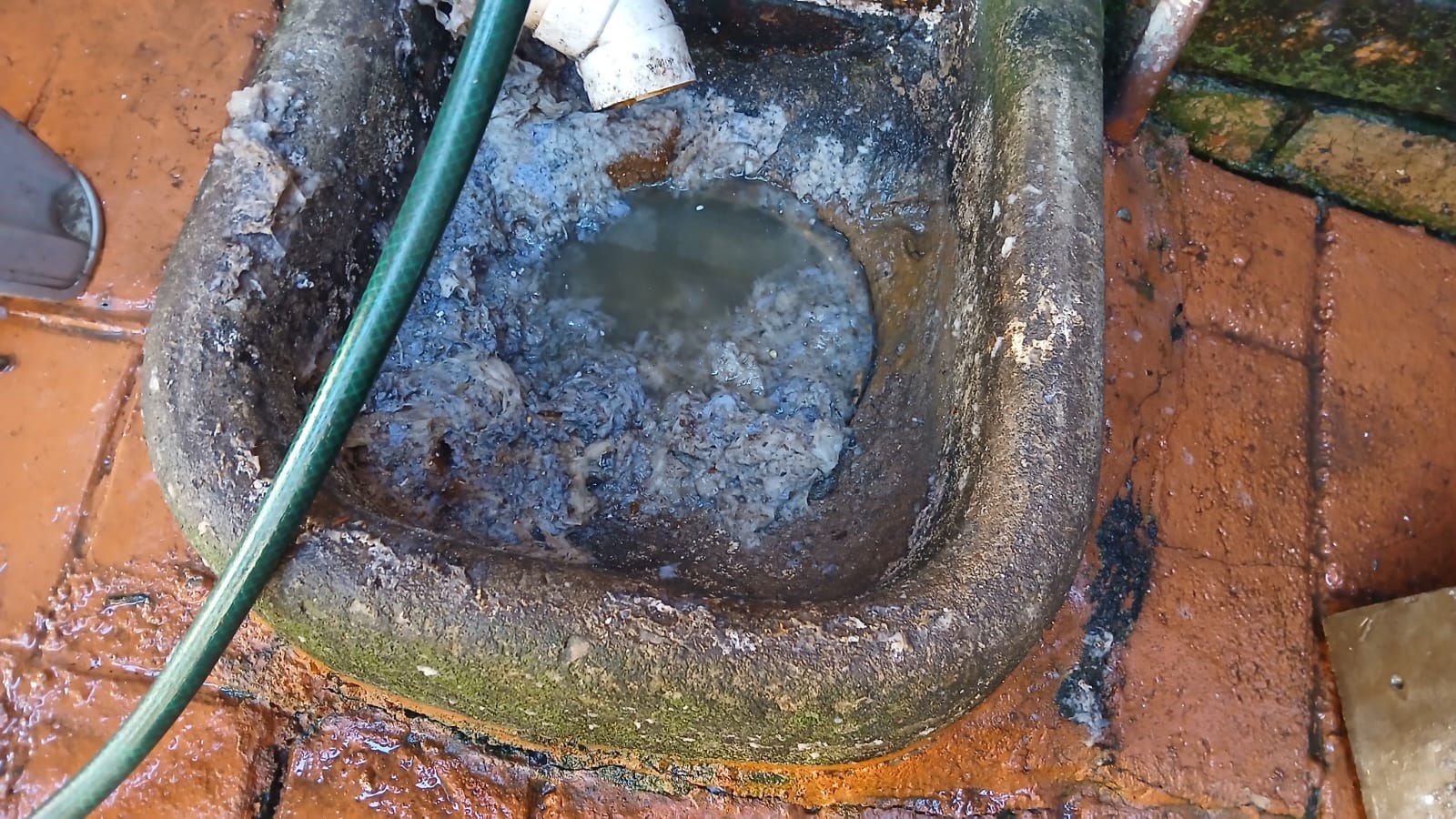
The CCTV camera revealed a dense mat of fibrous tree roots spanning the full bore of the 110 mm sewer lateral. Grease and debris had compacted against the root mass, reducing flow to near zero.
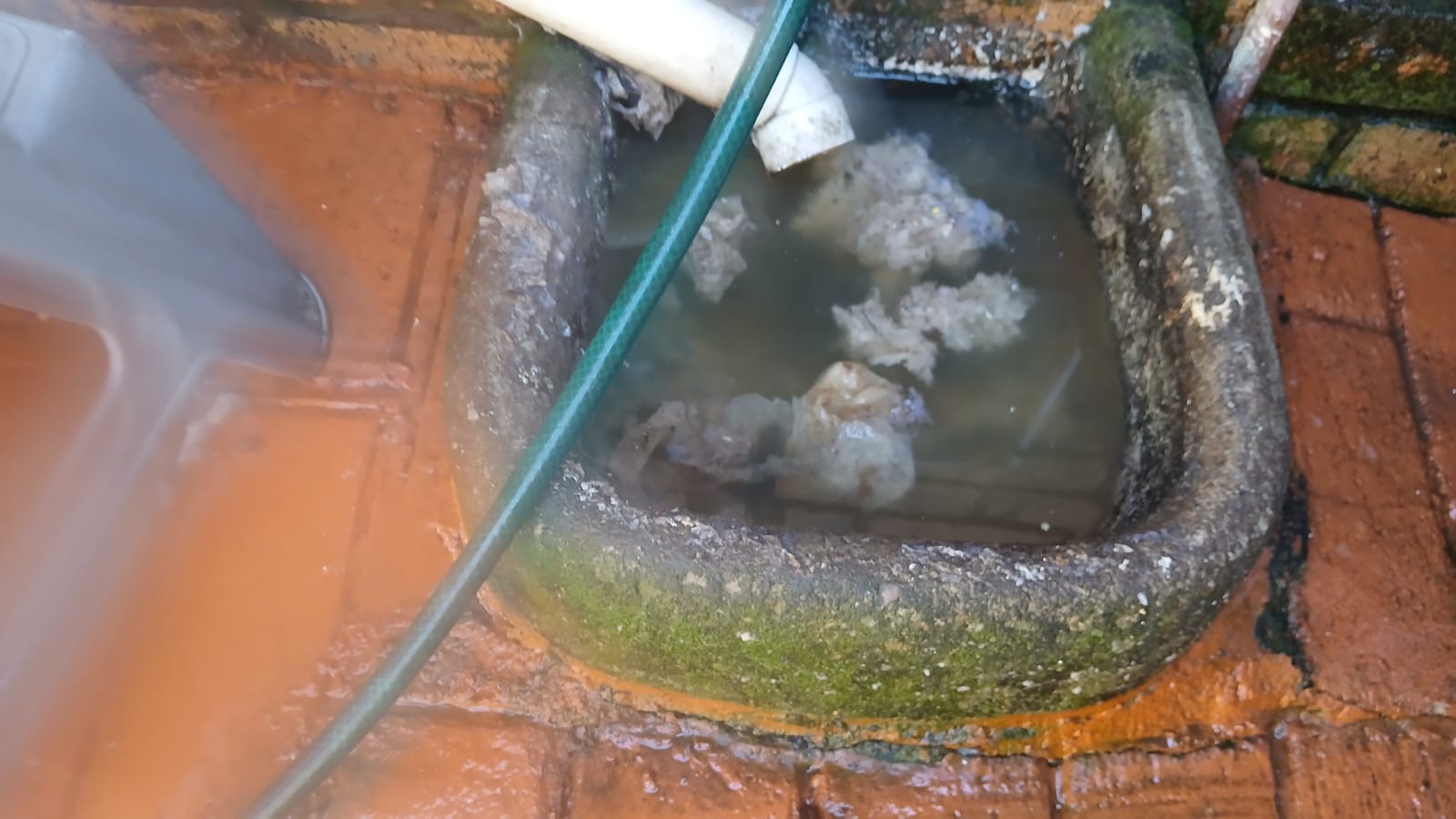
The technician fed a rotating root-cutting jetter nozzle into the pipe, delivering water at sustained high pressure to sever, break up, and flush the root mass downstream to the municipal sewer.
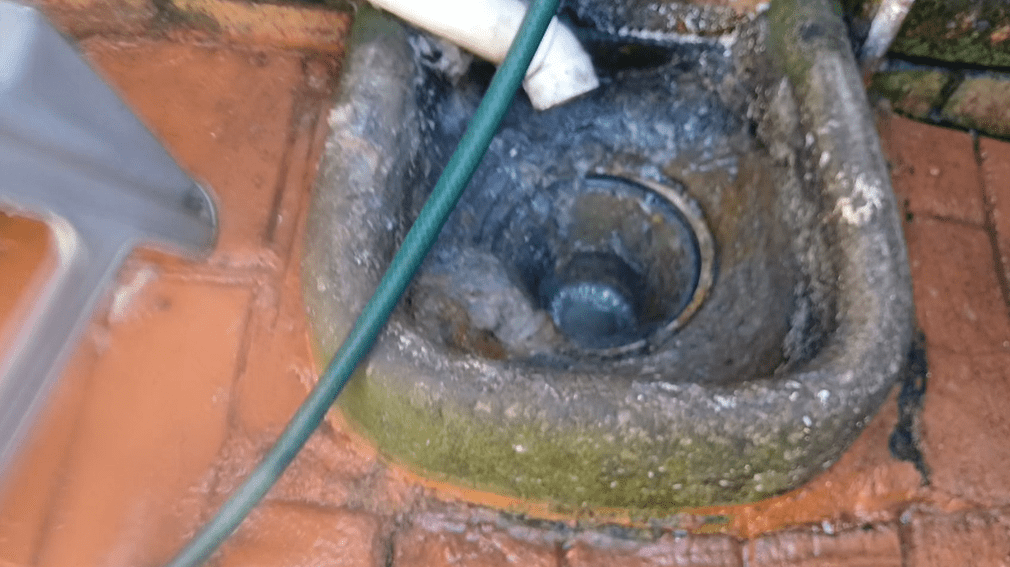
Full flow restored and confirmed with a second CCTV pass. The pipe bore was clear and the joint condition assessed. No structural fractures were detected, so no excavation was required.
Methods for Clearing Tree Root Blockages
There is no single universal remedy for root intrusion. The appropriate method depends on the severity of the blockage, the condition of the pipe, and whether the roots have caused structural damage. A qualified drain and sewer cleaning technician will assess all three factors before recommending a course of action.
| Method | Best Used When | Limitations |
|---|---|---|
| High-pressure water jetting | Root ball present; pipe structurally sound; blockage within reach of access point | Does not kill the root; roots will regrow from the pipe wall stubs within 12 to 24 months without further treatment |
| Electric eel (mechanical cutter) | Initial emergency clearance; access points too narrow for jetter | Less thorough than jetting; can leave root fragments that accelerate re-blockage |
| CCTV camera survey | All root intrusion jobs; essential for locating the precise entry point and assessing pipe integrity | Diagnostic only; must be combined with a clearing method |
| Chemical root treatment | Post-clearance prevention; slow-growth root populations; pipes confirmed structurally intact | Takes weeks to work; ineffective against an existing full blockage |
| Pipe relining or replacement | Cracked or fractured pipe confirmed by CCTV; recurring blockages in the same section every 6 months or less | Higher cost; excavation may be required depending on pipe depth and access |
Long-Term Prevention: Protecting Your Pipes Before the Roots Return
Drain maintenance is not a one-off fix when tree roots are involved. Root stubs left inside the pipe after jetting will regrow. The rate of regrowth depends on the species of tree, the soil moisture levels, and how much pipe wall the roots had established before clearance. For most properties in Lyttelton Manor with mature garden trees, the practical question is not whether the roots will return, but how quickly.
A structured prevention plan significantly extends the interval between blockages and reduces the risk of structural pipe damage. The following schedule reflects best practice for properties with established trees within five metres of a sewer lateral:
- Annual CCTV survey of the full sewer lateral from house to municipal connection, covering the pipe run under the pavement verge where street tree root pressure is typically highest.
- Preventive water jet drain cleaning every 12 to 18 months to remove regrowth before it reaches obstructive density. This costs a fraction of an emergency call-out.
- Chemical root inhibitor treatment applied immediately after jetting, using copper sulphate or a foaming root-kill agent to slow regrowth from exposed root stubs without harming the host tree above ground.
- Tree placement review for any new plantings: avoid sycamore, willow, fig, and poplar within ten metres of any sewer or stormwater lateral. Indigenous low-impact alternatives such as buffalo thorn or wild olive pose significantly lower root intrusion risk.
- Post-storm inspection after heavy Highveld summer rainfall, when saturated soil shifts pipe joints and stimulates root growth rates noticeably higher than the dry-season baseline.
Why This Is Not a Job for Chemical Drain Cleaners or DIY Cutters
Off-the-shelf drain cleaning products are formulated to dissolve organic matter such as hair and grease. They have no meaningful effect on established root masses and can damage older clay pipe joints when used repeatedly, converting a blockage problem into a structural one. Hiring the wrong contractor carries similar risks: an operator who clears the blockage with a hand-snake but does not inspect the pipe with a camera has no way of knowing whether the roots have cracked the pipe wall, and a cracked pipe that goes undetected will eventually collapse.
- A written, itemised quote before any work begins, with transparent after-hours and weekend call-out rates
- CCTV camera inspection as standard, not as an optional extra, to confirm the blockage cause and assess pipe condition
- A clear explanation of whether the pipe is structurally sound or requires repair, with photographic or video evidence from the camera survey
- A workmanship guarantee on the completed clearance, typically 30 days minimum for jetting work on root blockages
Red flags to be aware of: any operator who quotes a flat rate over the phone without asking about pipe age, tree proximity, or access point location is unlikely to carry camera equipment. A verbal quote significantly below the market rate almost always means hand-snake only, which clears the surface obstruction without removing the root mass, assessing structural damage, or locating the root entry point.
The Section Most Homeowners Do Not Think to Inspect
In Lyttelton Manor’s older properties, the most vulnerable section of the sewer lateral is rarely the long straight run beneath the back garden. It is the junction where the private lateral connects to the municipal main beneath the street verge. This joint is often the oldest length of pipework on the entire property run, subjected to road vibration, vehicle loading, and the concentrated root pressure of street-planted trees over which the homeowner has no control. A CCTV inspection that terminates at the property boundary rather than running the full lateral to the municipal connection point will miss this section entirely. Insist that any inspection covers the complete pipe, including the section under the pavement, and confirm the camera footage shows the final joint before the municipal main.
Tree-root intrusion in Lyttelton Manor is a structural problem, not a maintenance inconvenience. The suburb’s combination of mature garden trees, ageing clay pipe infrastructure, and active Highveld storm seasons creates conditions where root blockages are not exceptional events but predictable ones. A single CCTV survey can tell you exactly what is happening inside your sewer lateral before the problem reaches your floors and your living spaces.
Gauteng’s summer storm season drives soil movement and root activity sharply higher between October and March. An emergency call-out on a wet long weekend, with toilets out of service and water backing up through floor drains, is one of the most disruptive and entirely avoidable household crises a Lyttelton Manor homeowner can face. A planned preventive visit costs a fraction of the reactive alternative, and the difference in disruption is considerably greater than the difference in price.
Is your sewer lateral ready for the next storm season?
Do not leave your home’s drainage to chance. Book a camera inspection or speak to the team at Drain Masters today.