



How Long Does Hydro Jetting Take?
High-Pressure Drain Cleaning in Pretoria & Gauteng: What to Expect
A typical residential hydro jetting job takes 60 to 90 minutes from start to finish. That window covers the initial CCTV pipe inspection, the pressurised water blasting itself, and the final site clean-up. Highly complex commercial jobs or deep main sewer line blockages can stretch to half a day, but for the vast majority of Pretoria homeowners with a blocked kitchen drain or a sluggish bathroom stack, the work is done well within the lunch hour.
Key Takeaways
- Most residential hydro jetting jobs are completed in 60–90 minutes, including inspection and clean-up.
- A CCTV camera inspection always comes first to confirm pipe integrity before pressure is applied.
- Blockage severity, pipe length, and access difficulty are the three factors that extend the job time.
- Hydro jetting operates at pressures between 4,000 psi and 60,000 psi; this equipment is not for DIY use.
- It is effective against grease, sludge, scale, and tree roots, but is not a substitute for structural pipe repairs.
Drain Masters technician performing a high-pressure hydro jetting drain cleaning job in Pretoria.
What Is Hydro Jetting and How Does It Work?
Hydro jetting, also called water jet drain cleaning or hydroblasting, is a professional plumbing method that uses streams of high-pressure water to scour the interior walls of sewer and drain lines. Unlike chemical drain cleaners that dissolve grease without removing the residue, hydro jetting physically strips pipe walls clean, restoring full bore and flow capacity. Drain Masters uses the method as the standard solution for recurring or severe blockages across Pretoria, Centurion, Midrand, and Johannesburg.
The system works through three components: a commercial-grade pressure pump, a specialised high-pressure hose, and purpose-built nozzles. Depending on the blockage type and the pipe material, operating pressures range from 4,000 psi for residential drain lines up to 60,000 psi for industrial applications. Two nozzle types are deployed: forward-cutting nozzles to bore through obstructions, and rear-facing jets that propel the hose through the pipe while scrubbing the walls as they retreat. The result is a pipe interior that is as close to factory-clean as field conditions allow.
You can see a detailed explanation of the water jet cutting and cleaning mechanism on Wikipedia, which covers the physics behind high-pressure nozzle design and why rear-facing jets are more effective at wall adhesion removal than forward-only nozzles.
What Affects How Long a Hydro Jetting Job Takes?
The 60-to-90-minute estimate is a reliable baseline, but three variables can push a job well past it.
The Initial Camera Inspection
Every hydro jetting job at Drain Masters begins with a CCTV video pipe inspection. This is not optional: applying 4,000 psi or more to a cracked, corroded, or structurally compromised pipe can rupture it entirely, turning a blocked drain into a burst sewer line inside a wall cavity or under a slab. The CCTV camera locates the exact position and nature of the blockage, confirms the pipe material, and flags any sections that cannot safely absorb high pressure. The inspection itself typically adds 20 to 30 minutes to the job, but it prevents far more expensive problems downstream.
Severity and Type of Blockage
Simple grease and sludge accumulation responds to high-pressure water within minutes. Tree root intrusions, hardened limescale, or years of compacted debris take considerably longer to clear. Root systems in particular are a significant challenge in Gauteng's older suburbs, where large indigenous trees have had decades to colonise clay and cast iron sewer lines. A root-heavy blockage in a Garsfontein property, for example, may require multiple passes with different nozzle configurations before the line is fully clear. If you want to understand why your suburb's tree cover affects your drain risk, the Garsfontein suburb profile gives useful context about the area's established residential landscaping.
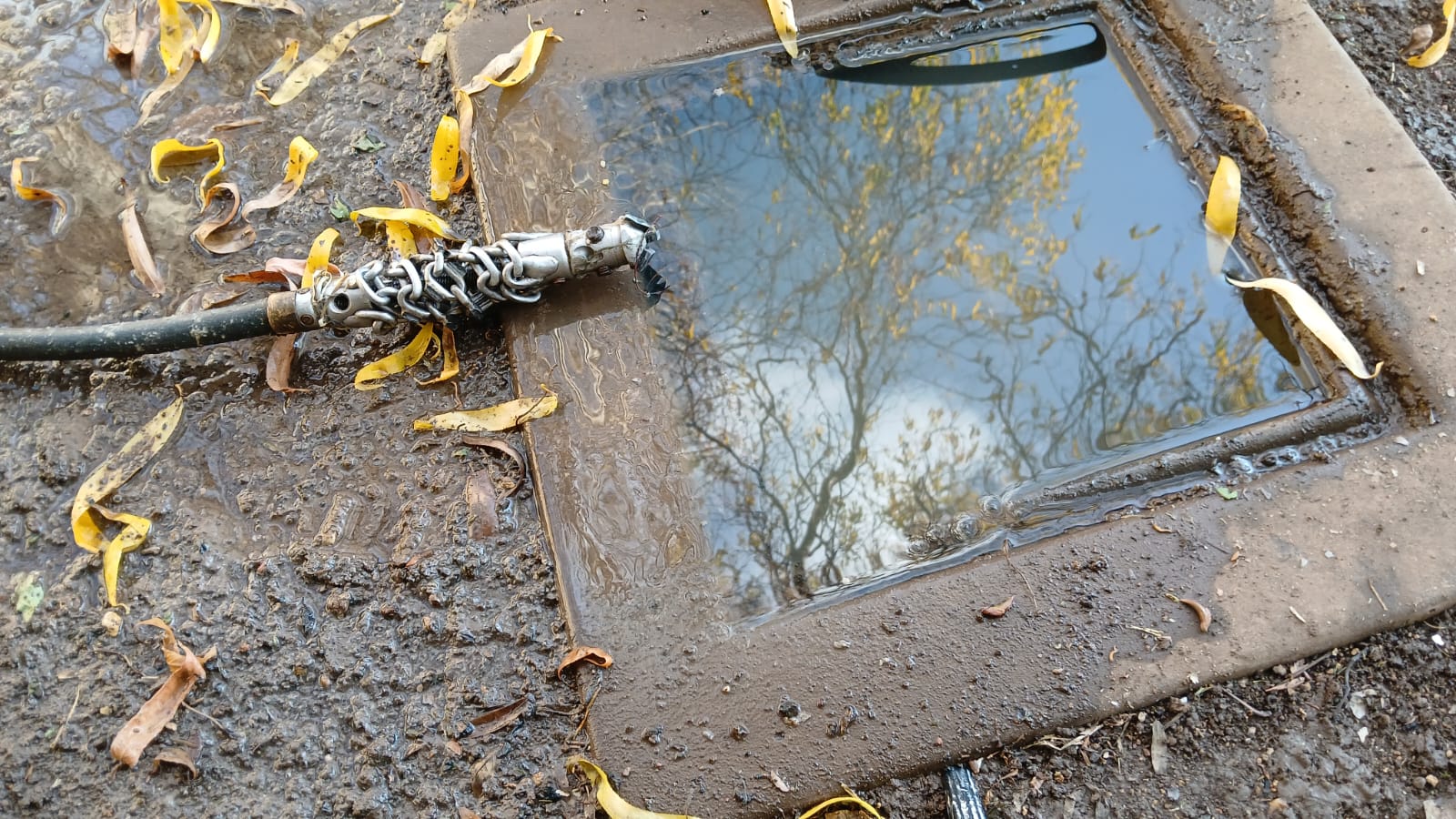
The drain before hydro jetting: compacted debris and root intrusion restricting flow in a Pretoria residential sewer line.
Pipe Length and Access
Long sewer runs, pipes routed beneath concrete slabs, or drain lines buried inside tight commercial kitchen risers all require additional time to set up, feed the hose through, and retrieve safely. A straightforward 10-metre kitchen drain stack takes far less time than a 40-metre municipal connection buried 2 metres below a paved driveway. If you are dealing with a severely blocked drain in a property with complex pipe routing, Drain Masters will give you an honest time estimate after the initial inspection, not before.
Hydro Jetting vs Mechanical Rodding: Which Clears Drains Faster?
Homeowners sometimes ask whether mechanical rodding is quicker. The short answer is yes for a simple, single obstruction; the longer answer is that rodding rarely produces the same lasting result.
Hydro Jetting (High-Pressure Water Jetting)
Advantages
- Scours the full pipe wall, not just the obstruction point
- Effective against grease, scale, roots, and debris in a single pass
- Results last significantly longer between service intervals
- No chemical residue; safe for septic systems
Limitations
- Requires prior CCTV inspection on pipes of unknown condition
- Higher cost per visit than mechanical rodding
- Cannot fix structural damage; cracked or collapsed pipes still need repair
Mechanical Rodding (Drain Snaking)
Advantages
- Lower cost per job
- Faster setup for simple, shallow blockages
- Works on pipes too fragile for high pressure
Limitations
- Punches a hole through the blockage rather than removing it fully
- Grease and scale residue remains on pipe walls, causing rapid re-blockage
- Less effective on long runs or complex pipe layouts
| Feature | Hydro Jetting | Mechanical Rodding |
|---|---|---|
| Average job time (residential) | 60–90 minutes | 30–60 minutes |
| Wall-cleaning effectiveness | Full pipe wall scour | Obstruction point only |
| Effective on tree roots | Yes | Partial (cuts but doesn't remove) |
| Effective on grease build-up | Yes | Limited |
| Pre-inspection required | Yes (recommended) | Optional |
| Typical service interval | Every 2–3 years | Every 6–12 months (on grease lines) |
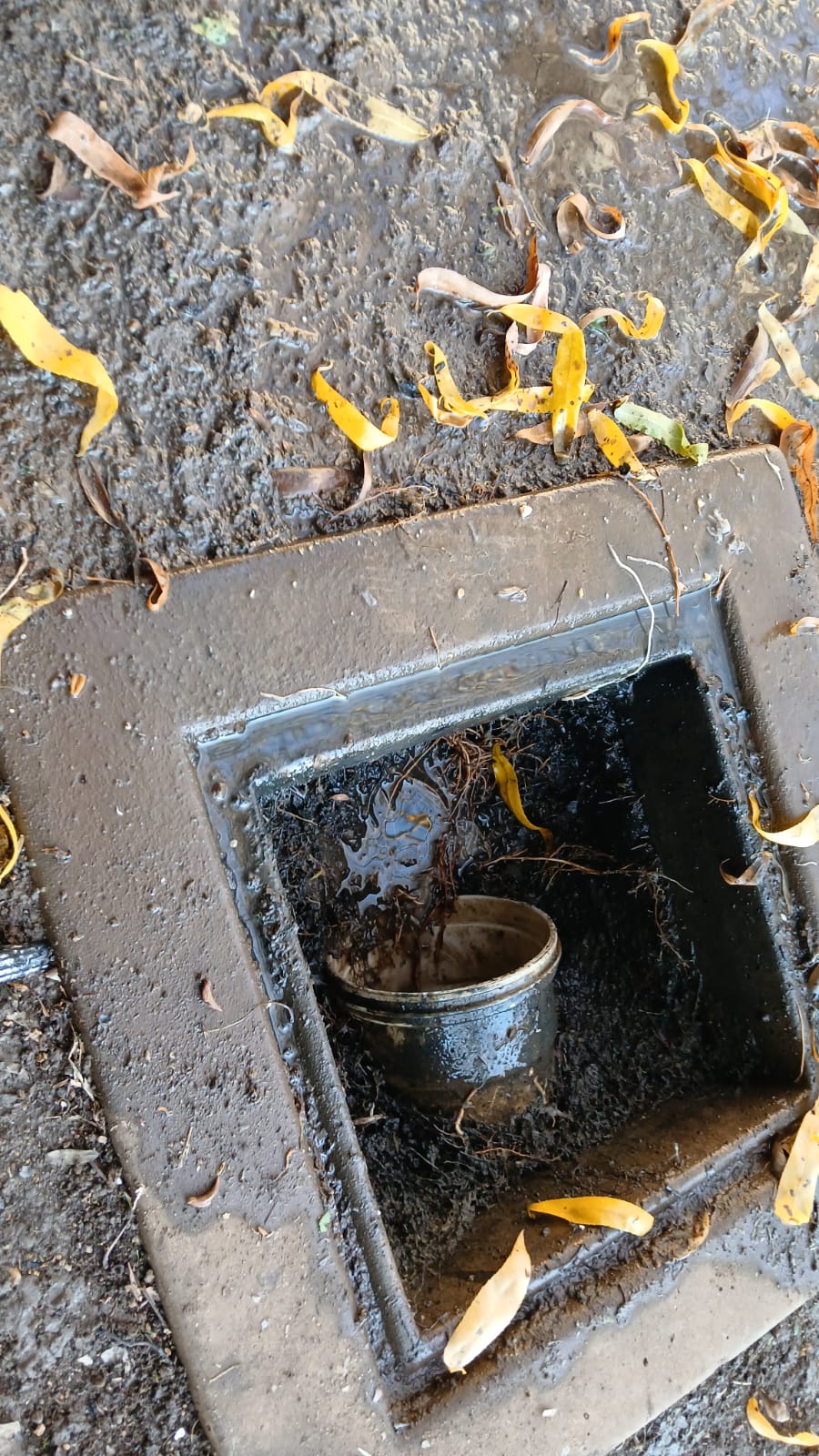
The same drain after hydro jetting: fully cleared pipe walls restored to maximum flow capacity.
How Often Should Drains Be Hydro Jetted?
For residential properties, Drain Masters recommends a drain cleaning service interval of every two to three years for kitchen and bathroom stacks where grease or hair accumulation is routine. Commercial kitchens, grease trap lines, and properties with large tree cover near sewer runs warrant an annual water jet drain cleaning service, typically scheduled before Gauteng's summer storm season begins in October.
Neglecting this interval is not a neutral outcome. Partial blockages restrict flow and increase pressure throughout the system, accelerating wear on pipe joints and seals. In older properties with vitrified clay pipes and original spigot-and-socket joints, a long-neglected partial blockage frequently triggers a sewer backup precisely when summer rain drives groundwater into the system and increases hydraulic load. The South African Insurance Association notes that sewer backup events are among the most common and costly domestic claims, with remediation frequently running into tens of thousands of rands once subfloor contamination is factored in.
A proactive drain and sewer cleaning schedule delivers four measurable benefits:
- Removes the grease and scale deposits that cause most recurring blockages before they reach critical mass.
- Provides an opportunity to identify developing structural issues (pipe cracks, root intrusion, joint displacement) before they cause a failure.
- Maintains consistent flow capacity, which reduces pressure on the municipal connection and on the property's internal pipe joints.
- Extends the serviceable life of original pipework, deferring the cost of full re-piping.
Why Hydro Jetting Is Not a DIY Job
Domestic high-pressure washers and so-called consumer-grade “drain jetters” operate at a fraction of the pressure required to clear hardened scale or tree roots from a sewer line. The rental equipment occasionally available from hardware stores in Centurion and Johannesburg North is a different class of machine again, typically lacking the nozzle range, hose length, or pressure consistency of professional equipment. More significantly, misapplying high-pressure water to a pipe of unknown condition carries real physical and financial risk: a burst pipe inside a wall or below a slab is a far more expensive outcome than the original blockage ever would have been.
The Institute of Plumbing South Africa (IOPSA) recommends that any high-pressure pipe cleaning be carried out by a registered plumber or specialist drain contractor. When choosing a contractor for water jet drain cleaning, watch for these red flags: no upfront camera inspection, no written quote before work commences, inability to explain what nozzle configuration they are using, or pressure to accept a same-day “special rate” without a site visit.
A reputable professional will:
- Conduct a CCTV inspection before any pressure is applied, and share the footage with you.
- Provide a written quote with a clear scope of work and no hidden call-out fees.
- Offer a post-job camera inspection to confirm the line is clear, particularly on complex commercial jobs.
The Detail Most Homeowners Miss: Root Inhibitor Treatment
Hydro jetting removes tree roots from a pipe, but it does not prevent them from returning. Root systems respond to moisture and nutrients; the residual dampness in a cleared sewer line is enough to draw regrowth back within 12 to 18 months. A root inhibitor treatment applied immediately after the hydro jetting session uses a slow-release foaming herbicide to coat the pipe walls and suppress regrowth without harming the surrounding trees or groundwater. For properties in Garsfontein, Moreleta Park, or any Pretoria East suburb with significant tree cover, Drain Masters recommends combining the drain cleaning service with a root inhibitor application. It adds minimal time to the job and typically doubles the interval before the roots return in sufficient density to cause a blockage again.
Hydro jetting is a time-efficient, chemically clean, and thorough solution for blocked and slow-flowing drain lines. For residential jobs, 60 to 90 minutes is the realistic expectation; for commercial or severely obstructed lines, allow half a day. The pre-job CCTV inspection is not a bureaucratic formality; it is the step that prevents a blocked drain from becoming a burst one. And a proactive maintenance schedule, ideally combined with root inhibitor treatment where trees are a factor, is consistently less expensive than the emergency call-out it replaces.
Gauteng's summer storm season brings sudden, heavy rainfall that saturates already-stressed ground and drives elevated water tables directly into compromised drain lines. A pipe carrying a partial blockage into October carries real risk of a full backup before November. The time to clear it is before the rains arrive, not after the ceiling tiles show water.
Don't wait for a backup to find out. Call Drain Masters or send a WhatsApp message today for a same-day assessment from a specialist drain cleaning team operating across Pretoria, Centurion, and Johannesburg.
Frequently Asked Questions
How long does hydro jetting pipes take?
Most residential hydro jetting jobs take between 60 and 90 minutes from the initial CCTV inspection through to post-job clean-up. Highly complex commercial lines, or pipes with severe root intrusion running over long distances, can extend this to three or four hours. Drain Masters provides a time estimate after the camera inspection, once the scope of the blockage is confirmed.
Can I do hydro jetting myself?
No. Consumer pressure washers do not reach the operating pressures needed to clear hardened scale or tree roots from sewer lines, and rental equipment is rarely suitable for enclosed pipe environments. More critically, applying high pressure to a structurally compromised pipe without a prior camera inspection risks rupturing the line. The Institute of Plumbing South Africa (IOPSA) recommends this work be carried out by a registered professional.
Is hydro jetting worth the cost?
For recurring blockages or drains that re-block within weeks of mechanical rodding, hydro jetting is almost always more cost-effective over a two-to-three-year cycle. It removes the entire deposit from the pipe wall rather than punching a temporary hole through the obstruction. For a single, simple blockage in a drain of known good condition, mechanical rodding may be the more proportionate response.
Will hydro jetting damage my pipes?
Correctly applied by a trained technician, hydro jetting does not damage pipes in sound structural condition. The CCTV inspection before every job confirms which sections can safely absorb the operating pressure and which cannot. Pipes that are already cracked, heavily corroded, or displaced will be identified at the inspection stage, and alternative methods will be recommended rather than proceeding with high-pressure cleaning on a compromised line.