



How Do You Unblock a Badly Blocked Drain?
From a blocked P-trap to a collapsed sewer line, the right method depends on where the blockage sits and how severe it is. Here is how to work through it correctly.
A badly blocked drain requires a physical approach before anything else. Chemical drain cleaners might shift a shallow grease film, but a genuine blockage caused by compacted debris, a displaced joint, or tree root intrusion will not respond to a bottle of sodium hydroxide. The correct sequence is mechanical first, chemical only as a secondary measure for organic buildup, and professional water jet drain cleaning or a CCTV video pipe inspection when the first two methods fail to clear the line.
Key Takeaways
- Always attempt physical removal before using chemical drain cleaners, which can damage older pipes.
- Start with the P-trap on sink drains; most shallow blockages are found here and cleared in minutes.
- A plunger works on partial blockages; a drain snake or rods reach deeper obstructions in the main line.
- Baking soda and white vinegar are effective only on organic buildup like soap scum and cooking fat, not hard debris or roots.
- If water is backing up across multiple fixtures simultaneously, the main sewer line is involved and professional intervention is required.
- Rotating drain rods clockwise at all times prevents them unscrewing and becoming lodged inside the pipe.
How Severe Is the Blockage? Start Here
Before reaching for any tool, identifying where the blockage sits saves time and prevents damage. A blocked drain in a single fixture points to a branch line or trap problem. The same symptom across several fixtures simultaneously, such as flushing the toilet and seeing water rise in the shower, indicates a main sewer line obstruction. The three severity levels below guide which method to apply first.
Single fixture draining slowly. Usually a partial trap or branch blockage. Start with the P-trap or plunger.
Single fixture completely blocked. No water passing. Use a drain snake or rods after the plunger fails.
Multiple fixtures affected or outdoor manhole overflowing. Main line blocked. Call a professional blocked drain service.
Sandton-specific note: Properties along Rivonia Road, Sandhurst, and the older estates near Bryanston frequently present with root-related main-line blockages, given the density of established trees. A partial clearance that returns within days almost always means root intrusion, which requires hydro jetting followed by root inhibitor treatment, not repeated manual rodding.
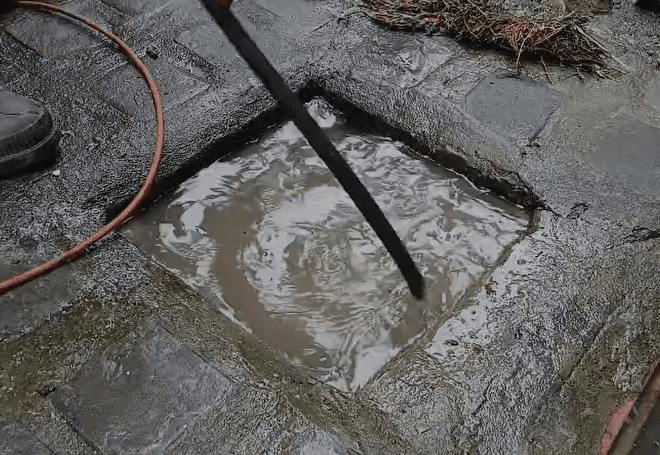
Correct assessment of the blockage location determines which method to use before any tools are deployed.
How to Unblock a Badly Blocked Drain: Step-by-Step
Work through these methods in order. Each step escalates in reach and force. Skipping to chemical solutions without attempting physical clearance first is one of the most common mistakes homeowners make, and it frequently results in a worse blockage pushed further into the system. The chemistry of drain cleaning products shows that alkaline solutions dissolve hair and organic matter but do nothing to dislodge compacted grease plugs, root masses, or foreign objects.
The P-trap is the U-shaped pipe section directly beneath a sink or basin. It retains a small amount of water permanently to block sewer gases, and it is also where most shallow sink blockages accumulate. Clearing it takes under ten minutes and requires no specialist tools.
- Place a bucket directly beneath the P-trap to catch retained water and debris.
- Use an adjustable wrench to loosen the slip nuts at each end of the curved section.
- Remove the trap, clear out hair, grease, and accumulated debris by hand or with a bottle brush.
- Rinse the trap under a tap, reattach it firmly, and run water to test flow.
A plunger works by creating hydraulic pressure: water is incompressible, so a sharp downward thrust sends a pressure wave directly into the blockage. The technique matters more than the force applied.
- Remove as much standing water as possible to avoid splashing.
- For double sinks, block the second drain outlet with a wet cloth to prevent pressure escaping.
- Fill the basin sufficiently to submerge the rubber bell of the plunger fully.
- Position the plunger so the cup creates a complete seal over the drain opening.
- Pump vigorously in a controlled rhythm, ten to fifteen strokes, then pull the plunger away sharply to release pressure. Repeat three times before testing flow.
This method is effective only on soft organic accumulation: soap scum, cooking fat in the early stages of buildup, and slow-draining kitchen lines with a grease film. It will not shift a solid blockage. Use it as a maintenance flush after clearing a blockage physically, or as a first measure on a slow but still-draining sink.
- Pour one cup of bicarbonate of soda directly down the plughole, followed immediately by one cup of white vinegar.
- Cover the drain opening with a cloth or rubber stopper and leave the fizzing reaction undisturbed for 20 to 30 minutes.
- Flush with several cups of near-boiling water to clear the loosened material through the pipe.
- Repeat once if drainage improves but remains slow; if there is no improvement at all, proceed to the drain snake.
A flexible spring drain auger reaches blockages 3 to 5 metres into a branch pipe, well beyond the reach of a plunger. It is the correct tool for bathroom drains with hair-and-soap blockages and for kitchen lines where a grease plug has set further down the run.
- Feed the cable slowly into the drain opening until you feel resistance from the blockage.
- Rotate the handle clockwise while applying gentle forward pressure to break apart or hook into the obstruction.
- Pull the cable out steadily, retrieving as much debris as possible. Do not yank the cable.
- Run hot water for two minutes after clearing to flush loosened material through the pipe.
Drain rods are connectable fibreglass sections used to reach blockages in the main sewer line from an outdoor manhole or drain access point. The worm screw or plunger attachment on the tip breaks apart compacted blockages or pushes them through to a clear section of pipe.
- Locate the nearest outdoor manhole or main drain inspection point; lift the cover carefully using a drain key or flat bar.
- Attach the plunger or worm screw head to the first rod section and feed it into the pipe towards the blockage.
- Add rod sections one at a time as the lead section advances. Keep all connections tight.
- Always rotate the rods clockwise only. Anticlockwise rotation unscrews the sections inside the pipe, leaving them permanently lodged in the line.
- Once the blockage clears, withdraw the rods in sections, rotating clockwise throughout.
DIY Drain Unblocking vs Professional Drain Cleaning: When to Stop
Manual methods clear the majority of residential blockages. The point at which DIY becomes counterproductive is when the same blockage recurs within a few weeks, when multiple attempts fail to restore full flow, or when water begins backing up from unexpected points. At that stage, a professional drain cleaning service in Sandton with CCTV inspection capability is the only reliable path to a permanent fix.
DIY Methods Work Well When
- The blockage is in a single fixture
- Slow drainage started recently
- The cause is visible hair or soap buildup
- No previous history of that drain blocking
- Access to the P-trap or manhole is straightforward
Call a Professional When
- Multiple fixtures back up simultaneously
- Blockage recurs within weeks of clearing
- Drain rods meet solid resistance without clearing
- Sewage smell persists after clearing
- Outdoor manhole is overflowing
| Method | Reach | Best For | Limitation |
|---|---|---|---|
| P-trap clearance | Under sink only | Shallow sink blockages | Only reaches the trap section |
| Plunger | 0–0.5m | Partial blockages, toilets, sinks | No effect on deep or hard blockages |
| Baking soda/vinegar | Surface only | Slow drains, organic buildup | Ineffective on solid obstructions |
| Drain snake/auger | 3–5m | Branch pipe blockages | Cannot clean pipe walls |
| Drain rods | Up to 20m | Main sewer line, outdoor drains | Operator error risk; no pipe inspection |
| Hydro jetting | Full line length | Grease, roots, compacted debris | Requires professional equipment |
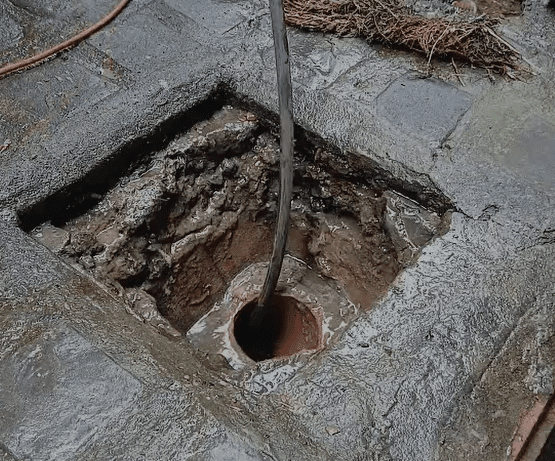
High-pressure water jetting clears the full bore of the pipe and removes the debris film that causes repeat blockages within weeks of a manual clearing.
What a Professional Blocked Drain Service Does Differently
Drain Masters approaches a badly blocked drain in a specific sequence that DIY methods cannot replicate. The first step on any recurring or multi-fixture blockage is a CCTV video pipe inspection: a waterproof camera feeds through the line and identifies the exact location, nature, and extent of the obstruction before any clearing work begins. This matters because a root intrusion, a displaced joint, and a grease plug each require a different response. Rodding a root without knowing the pipe condition risks fracturing an already-cracked line.
For a drain unblocking service in Fourways or across greater Johannesburg, Drain Masters deploys high-pressure water jetting rated between 2,000 and 4,000 PSI. The jetting nozzle cleans the full bore of the pipe, not merely the narrowest point of the obstruction, and leaves the pipe wall clear of the scale and grease film that causes repeat blockages within weeks of a manual clearing. The Sandton area’s established tree canopy and mix of vitrified clay and PVC pipework make this combination of CCTV inspection and hydro jetting the most reliable long-term solution for residential properties.
- ✓ A written quotation before any work begins, specifying the method and access points to be used.
- ✓ CCTV inspection capability to confirm the blockage location and pipe condition before and after clearing.
- ✓ A workmanship guarantee on the clearing service, covering the job for a defined period after completion.
The Detail Most People Get Wrong: Drain Rod Direction
Of all the mistakes made during a DIY drain unblocking attempt, the most consistently damaging is rotating drain rods anticlockwise. Every rod section connects to the next via a clockwise-threaded fitting. A single anticlockwise turn while pushing the rods forward unscrews a joint inside the pipe, leaving a section permanently lodged in the sewer line. Retrieving a lost rod section from a sewer pipe is a professional job requiring CCTV equipment and, in many cases, excavation. The fix takes moments to prevent and hours, plus significant cost, to remedy. Every rotation of the rod handle, going in and coming out, must be clockwise without exception. This applies to all blocked drain situations where rods are used, regardless of how familiar the operator is with the technique.
Frequently Asked Questions
Boiling water is effective as a flush after clearing a grease blockage with baking soda and vinegar, but it will not shift a solid obstruction on its own. Pour it slowly to avoid thermal shock to older PVC or clay pipes, and never use it on a completely stopped drain where water has no route to escape.
Start with the P-trap beneath the sink: remove it, clear the debris, and reattach it. For deeper blockages, a flexible drain snake or drain rods are the next step. Baking soda and vinegar can help with organic buildup but are not a substitute for physical clearance of a solid blockage.
Main sewer line blockages are most commonly caused by tree root intrusion into cracked joints, a buildup of fats and non-flushable wipes over time, or a pipe that has displaced or collapsed. In Sandton and Johannesburg’s older residential areas, root intrusion from jacaranda and eucalyptus trees is a frequent cause of repeat main-line blockages.
High-pressure water jetting is generally safe for vitrified clay pipes in good condition. A CCTV inspection before jetting confirms the pipe’s structural integrity and identifies any sections that require a lower operating pressure or a different clearing method. Drain Masters always inspects before jetting on older pipe systems.
A straightforward residential blockage on an accessible line is typically cleared within one to two hours. Main sewer line jobs requiring CCTV inspection and hydro jetting take two to four hours depending on the line length and severity. Drain Masters provides a time estimate at the point of quotation.
A prolonged or untreated blockage can cause sewage backflow into the property, saturate soil around pipe joints leading to foundation settlement, and in severe cases contribute to sinkholes in sandy Johannesburg subsoil. Early intervention with a professional drain cleaning service is significantly cheaper than remediation after structural damage has occurred.
Unblocking a badly blocked drain follows a clear sequence: physical removal first, chemical treatment only for organic buildup, and escalation to drain rods or professional hydro jetting when manual methods reach their limit. The severity assessment at the start of the process, whether one fixture is affected or several, determines how far down that sequence you need to go. Getting that assessment right at the beginning saves time, avoids damage to ageing pipe systems, and prevents a simple blockage becoming a collapsed line.
Sandton’s summer storm season pushes every drain in the city to capacity. A line that is partially restricted in winter will fail entirely when October’s downpours arrive and stormwater volumes peak. Addressing a blocked drain before the rains return is not caution for its own sake; it is the difference between a one-hour call-out and a multi-day repair.
Do not wait for the problem to spread. Drain Masters responds same-day across Sandton, Johannesburg, and surrounding Gauteng suburbs, with CCTV-confirmed results and a written workmanship guarantee.