



How to Unclog a Drain Pipe with Roots in Constantia Park, Pretoria
A mature Jacaranda brought a residential sewer line to a standstill. Here is exactly what we found, what we did, and what the pipe looks like now.
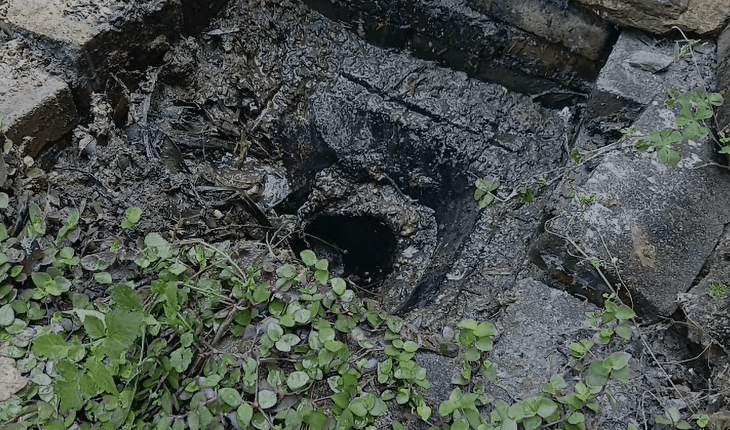
The smell was the first warning. A faint, damp sulphur drifting through the downstairs bathroom of a double-storey home on a quiet Constantia Park street. Within a week it had become a full blockage: water backing up into the shower, the kitchen drain refusing to clear, and a garden that had turned inexplicably boggy along the boundary wall. The homeowner had already tried a plunger, then a supermarket-brand chemical drain cleaner, then a hired hand-snake from a hardware store. Nothing worked. The pipe was not just slow; it was sealed shut by a tangle of roots that had been growing, undisturbed, for what looked like several years.
Tree-root intrusion is among the leading causes of residential sewer and plumbing failures in Pretoria East. The suburb is lined with mature Jacaranda, Tipuana, and Wild Fig trees, all of which produce aggressive feeder roots that follow moisture gradients directly into underground pipe joints. Once inside, roots branch, thicken, and create a fibrous dam that traps grease, paper, and sediment until flow stops entirely. This case study documents the Drain Masters response to one such blockage in Constantia Park, from initial inspection through to final drain cleaning and restoration.

What We Found on CCTV Inspection
The first step was a CCTV video pipe inspection. A push-rod camera entered the access point at the property boundary and travelled the length of the 110 mm vitrified clay pipe running beneath the garden. Clay pipe is standard in Pretoria East suburbs built before the mid-1990s, and its spigot-and-socket joints are a known vulnerability. The joints rely on a cement collar that shrinks and cracks over decades, opening gaps of just one or two millimetres. That is all a Jacaranda root needs.
What the camera revealed was not a minor intrusion. Root material had entered at three separate joint failures along a six-metre section of pipe. The roots had then grown laterally along the internal surface, forming overlapping layers of fibrous mass. Decomposing organic matter, cooking grease, and toilet paper had compacted into the root tangle, creating a plug that was almost completely impermeable. The pipe had not failed structurally; it was still intact and aligned. But it was, for all practical purposes, not functioning as a drain at all.
Why Constantia Park Properties Are Especially Vulnerable
Constantia Park was developed primarily in the 1970s and 1980s, at a time when Jacaranda trees were planted as a matter of course along residential boundaries and verges throughout Pretoria East. Those trees are now mature, with root systems that extend far beyond the drip line. A Jacaranda taproot can travel 10 to 12 metres horizontally in search of moisture, and Pretoriaâs long dry winters, with annual rainfall averaging around 685 mm concentrated in the summer months, create precisely the conditions that send roots hunting underground. A slow-leaking pipe joint is, to a tree root, an almost irresistible source of warm, nutrient-rich water.
The City of Tshwane’s ageing infrastructure means the boundary between municipal responsibility and private homeowner responsibility is frequently contested. Older properties in Constantia Park often have clay or concrete pipes that pre-date current PVC standards. Unlike modern solvent-welded PVC systems, these older pipes have mechanical joints that rely on rubber seals or cement collars, both of which degrade over 30 to 40 years of ground movement and thermal cycling. The South African Weather Service records show Pretoria East can experience temperature swings of 20 degrees Celsius between summer day-time highs and winter nights, and this repeated expansion and contraction stresses every buried pipe joint in the system.
Rodding vs. High-Pressure Jetting for Root Blockages
When a homeowner calls about a blocked drain, the first question is always which method is appropriate. For root intrusions, the answer depends on severity. Minor, early-stage root feathering at a single joint can sometimes be cleared by mechanical rodding. A full root mass, like the one found in this Constantia Park pipe, requires water jet drain cleaning at high pressure. The distinction matters because using the wrong method either fails to clear the blockage or risks damaging an already-stressed pipe.
Mechanical Rodding
Rodding uses a rigid or semi-rigid steel cable fitted with a rotating cutter head, driven manually or by a small electric motor. It is fast to deploy and requires no water supply at the job site.
- Suited for: Light root feathering, single-joint intrusion, soft organic blockages
- Limitation: Cuts a channel through the root mass but leaves root fragments on the pipe wall. Regrowth typically occurs within three to six months.
- Risk: Aggressive rodding on clay pipe can displace or crack already-fragile joints
High-Pressure Water Jetting
Hydro jetting, also called high-pressure drain cleaning, propels water at 3,500 to 4,000 psi through a rotating nozzle that cuts backwards and sideways simultaneously. The jetting head travels the length of the pipe, shredding root material and flushing it downstream. A post-jet CCTV pass then confirms clearance.
- Suited for: Moderate to severe root intrusion, multi-joint blockages, grease-compacted root masses
- Advantage: Removes root material from the pipe wall rather than simply piercing it; significantly longer period before regrowth
- Risk: Requires skilled operator; excessive pressure on a structurally compromised pipe requires prior CCTV assessment
| Feature | Mechanical Rodding | High-Pressure Jetting |
|---|---|---|
| Suited to severe root mass | No | Yes |
| Removes root from pipe wall | Partial | Complete |
| Clears compacted grease simultaneously | No | Yes |
| Typical time to regrowth | 3 to 6 months | 12 to 24 months |
| CCTV confirmation recommended | Optional | Standard |
| Suitable for clay pipe | With caution | Yes, post-inspection |
The Drain Masters Response: Step by Step
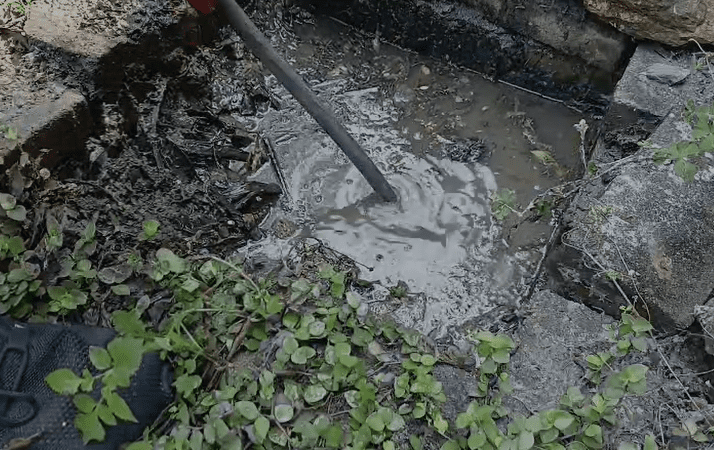
With the CCTV diagnosis complete, the team set up the drain and sewer cleaning unit at the downstream access chamber. Working upstream, the root-cutting jetting head entered the pipe and began the first pass at reduced pressure to assess how the clay pipe responded. The pipe was intact throughout, which meant full jetting pressure could be applied safely. Three passes in total were made, each confirming on the live camera monitor that the root mass was progressively disintegrating and moving downstream toward the municipal connection.
After the third pass, the camera was re-inserted for a full post-clean inspection. The pipe interior was clean across the entire affected section: no residual root fragments on the pipe wall, joints clearly visible and stable, and the internal diameter fully restored to its designed capacity. The homeowner witnessed both the pre-clean and post-clean footage on the monitor so that the difference was unambiguous.
- CCTV inspection to locate and document all root entry points
- Pressure test at reduced psi to confirm pipe structural integrity before full-power jetting
- Three-pass drain unblocking sequence with root-cutting rotating nozzle
- Post-clean CCTV pass to verify full clearance and identify joint condition
- Written report with before/during/after footage for the homeownerâs records
The Step That Prevents It Happening Again
Clearing the roots resolves the immediate blockage, but it does not close the joint gaps through which the roots entered in the first place. Within 12 to 24 months, new root growth will find the same pathway and the cycle begins again. The long-term solution is pipe relining, a no-dig process in which a resin-saturated liner is inserted into the existing pipe and cured in place, forming a new smooth-bore pipe within the old one. The resin liner seals every joint from the inside, eliminating the entry points entirely. No excavation is required, and the finished pipe is rated for a 50-year service life. For Constantia Park properties with mature trees and clay pipework, it is the only intervention that genuinely resolves the root problem rather than managing it.
A blocked drain service call-out like this one is also an opportunity to apply a root inhibitor treatment inside the pipe after jetting. A slow-release copper sulphate compound, introduced at the access point, creates a chemical barrier at the joint locations. It does not kill the tree; it discourages root penetration at the treated zone. Used in conjunction with an annual drain cleaning inspection, it significantly extends the window between blockages for homeowners who are not yet ready to commit to relining.
Early Warning Signs Every Constantia Park Homeowner Should Know
Root intrusion does not happen overnight. There is almost always a warning period of six months to two years during which the drainage slows progressively before it stops entirely. Recognising the early signs means a jetting clean can resolve the problem before a full blockage develops, and before any backflow causes damage to flooring, cabinetry, or the sub-floor structure beneath a bathroom or kitchen.
- Drains that clear slowly even after running hot water for several minutes
- A persistent low-level sulphur smell from floor drains, even when they appear clear
- Gurgling sounds from one drain when another is in use, indicating partial blockage creating air displacement
- Boggy or unusually lush patches in the garden directly above the sewer line
- More than one drain in the house slowing simultaneously, which points to a blockage downstream rather than a localised trap issue
- Recurring blockages in the same pipe despite repeated use of chemical treatments or hand-snaking
Tree-root blockages in Constantia Park are not a matter of bad luck. They are a predictable consequence of mature plantings, ageing clay pipework, and the long dry winters that push root systems toward buried moisture sources. The right response is a CCTV inspection first, high-pressure jetting to clear the blockage completely, and a clear-eyed plan for either pipe relining or annual maintenance to keep the problem from returning. Chemical drain treatments and hand-snaking are not adequate for a root intrusion of the kind documented here; they provide temporary relief at best and can mask a problem until it becomes significantly more expensive to resolve.
The Constantia Park job was completed without excavation, without disruption to the garden, and without any damage to the existing clay pipe. The homeowner had flow restored within three hours of our arrival. If your drains have been slow for more than a few weeks, or if you have mature trees within ten metres of your sewer line, it is worth finding out what is in your pipe before the decision is made for you.
Is your Constantia Park drain showing the early signs of root intrusion?
The longer roots are left unchecked, the more extensive the damage to your pipe joints. Contact Drain Masters today for a CCTV inspection and same-day jetting service.